What actually keeps botox injections safe when a toxin is being placed under your skin? A strict chain of sterility, precise dosing, and trained technique make botox cosmetic treatments reliable and low risk for most healthy adults.
The safety question patients really ask
When patients ask if botox is safe or not, they rarely mean the molecule is harmless. They’re asking whether the botox procedure they’re considering will be performed with sterile technique, by a certified injector who knows anatomy, dosing, and aftercare. They want to know what protects them from infection, drooping brows, spocky arches, or a frozen smile. I have sat across from men and women in their 20s through their 70s who wanted smoother skin or a subtle brow lift, and the conversation always comes back to the same pillars: product quality, sterility, injector skill, and follow-up.
Botox in plain terms: what it is and how it works
Botox is a purified neurotoxin protein, botulinum toxin type A, manufactured under pharmaceutical standards and FDA approved for cosmetic use in the glabella lines, forehead, and crow’s feet, among other medical indications. It doesn’t fill or plump, so calling it a botox filler is a common mix-up. Instead, it softens movement by temporarily blocking the signal between nerves and muscles. That temporary “quieting” reduces the repetitive folding of skin that etches wrinkles over time.
Here’s the useful part for safety: the cosmetic dose is tiny, measured in units, and placed into superficial facial muscles that control expression. The body metabolizes it gradually. The effects usually begin in 3 to 5 days, peak at about 10 to 14 days, and the botox effects duration is typically 3 to 4 months. Some patients stretch to 5 or 6 months with consistent maintenance, others see 2 to 3 months, especially if they exercise intensely or have high baseline muscle strength.
From factory to face: the sterility chain you don’t see
The safety profile of botox depends on an unbroken sterility chain. That begins with the manufacturer and ends with the injector’s gloved hands.
- Manufacturing and packaging: Pharmaceutical-grade botulinum toxin A is produced in clean-room environments, then vacuum-sealed and shipped as a dry powder that remains stable when refrigerated. Each vial has a lot number for traceability. Many clinics keep a log tying lot numbers to botox appointments, which becomes crucial if there’s ever a safety notice or a rare adverse event. Reconstitution: The injector or nurse mixes the powder with sterile, preservative-free saline. This step happens under aseptic conditions, using single-use sterile syringes and needles. The amount of saline determines concentration, which in turn affects precision. Over-dilution can spread the effect too wide, under-dilution can make micro-dosing difficult. A typical vial is reconstituted with 1 to 4 milliliters of saline. The solution is clear, stored in a medical fridge, and labeled. Set-up and skin prep: On treatment day, the skin is cleaned thoroughly, often with 70% isopropyl alcohol or chlorhexidine, and left to dry completely to reduce infection risk. Even a “quick touch-up” deserves the full prep. In high-volume settings, I watch for the basics: new gloves on, fresh needles, a sharps container nearby, alcohol or antiseptic in use, and clean surfaces. That’s a baseline non-negotiable in any reputable botox clinic or medical spa. Draw-up and injection: Needles are fine gauge, often 30 or 32, which helps reduce bruising. Syringes are single-use. Injectors frequently change needles mid-session to keep the tip sharp because dull needles can cause more tissue trauma and bruising. Each injection site is placed to respect anatomy, in small units per point. Post-use and disposal: Any leftover solution should be handled according to manufacturer guidance. Needles and syringes go into sharps containers immediately. I avoid practices where vials are shared across days without proper storage or where labeling is sloppy.
When this chain holds, infection rates are remarkably low. In my practice, the most common local reaction is a pinpoint bruise or a tiny welt that fades within hours. True infections are rare, and when they happen, they usually trace back to a breach in basic technique or questionable sourcing.
Dosing, units, and why “less is more” isn’t always safer
The word units matters here. A unit measures activity, not volume, so talking about botox dosage in units is the only standardized way to discuss the botox procedure. Typical doses for common areas:
- Glabella (the “11s”): roughly 12 to 24 units for women, 20 to 30 for men with stronger corrugators. Forehead lines: often 6 to 16 units, titrated carefully to avoid a heavy brow, and always balanced with the glabella. Crow’s feet: 6 to 12 units per side, depending on smile dynamics. Brow lift effect: micro-doses of 1 to 2 units at the tail of the brow to lessen the pull of the orbicularis. Masseter reduction or jawline contouring: 20 to 30 units per side for a first session, sometimes more for men, spaced carefully and reassessed at 8 to 12 weeks.
People often request “baby botox” for a natural look. Small doses can be beautiful for botox prevention of fine lines, but under-dosing the glabella while treating the forehead can cause an odd lift in the center and a droop at the sides. Safety is not only about sterility. It is also about balanced dosing so your facial muscles still hold your brows where they should. A good certified injector watches how you animate, marks points precisely, and plans units across areas so you look like yourself at rest and in motion.
The real-world risks, ranked by what I see most
Mild bruising and swelling are common. A dot the size of a sesame seed or a patch of yellow-green at day 3 is normal. Patients who take fish oil, vitamin E, ginkgo, or daily aspirin bleed and bruise more easily. If you’re on a blood thinner for medical reasons, discuss it with your dermatologist or injector. You can still have botox for wrinkles, but set expectations about botox bruising.
Headache can occur, particularly after a first botox session. Most resolve within a day or two. Ice and hydration help.
Uneven results, spocking (peaked brows), or a heavy forehead usually reflect dosing or placement, not contaminated product. These issues are fixable at a follow-up. I prefer to under-treat slightly in a first-time botox appointment and refine at two weeks.
Ptosis, the feared drooping eyelid, is uncommon when injecting the forehead or glabella with correct depth and placement. When it does happen, it usually appears within 3 to 7 days and softens over a few weeks. There are temporary prescription eyedrops that can help lift the lid. The best prevention is injector experience and good patient behavior for 24 hours after treatment.
Allergic reactions are rare. Most “reactions” patients describe are simply localized swelling or a histamine response that fades quickly. True allergy to botox itself is very unusual.
Systemic effects are extremely rare in cosmetic dosing and are typically associated with very high doses in medical treatments or improper injection depth. If you experience widespread weakness, trouble swallowing, or voice changes, contact your provider immediately and seek care.
Sterility red flags worth noticing
Sterility should be visible in small ways. If I walk into a botox practice and see cluttered trays, open vials without labels, or reused needles, I walk out. A clean room is not a guarantee of sterile technique, but it is a strong indicator. Reputation matters, and so does what you see in front of you.
Ask where the product was purchased. Discount botox near me searches sometimes lead to counterfeit or gray-market products. Real botox comes through authorized channels. Reputable clinics are happy to show the box or vial with a brand label and lot number.
If you have an infection or cold sore flare on the face, reschedule. Even sterile technique cannot completely mitigate the risk of spreading a virus like HSV-1 near the lips or nose.
What the appointment should feel like
A proper botox consultation starts with a medical history and a facial assessment. You should be asked about pregnancy or breastfeeding, neuromuscular disorders, allergies, medications, supplements, past botox results, and aesthetic goals. Then you and the provider talk about trade-offs. Smoothing the forehead too aggressively can drop brows. Leaving some movement prevents a flat look but accepts a faint line here or there. When you raise your brows, we watch the pattern. If your outer brow collapses naturally, we will plan support with the glabella while dosing lightly mid-forehead.
Marking points with a cosmetic pencil helps. For someone with high hairlines or a low brow position, the injection map changes. For someone seeking a botox brow lift, we work at the lateral frontalis and tail of the brow to balance opposing muscle pulls. For botox eye treatment at the crow’s feet, we respect the zygomaticus and avoid smiles that pull unevenly.
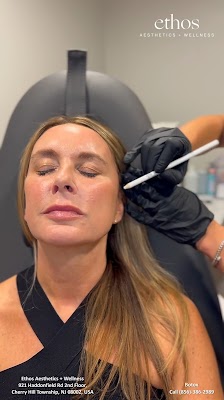
Most sessions take 10 to 20 minutes. You feel a quick pinch and maybe a little pressure. We apply gentle pressure after each injection to minimize bleeding. No makeup should go on the treated areas for at least a few hours. I recommend avoiding saunas, hot yoga, heavy workouts, or facial massages the same day. The goal is to let the micro-droplets sit exactly where they were placed.
Aftercare that actually matters
Over the years, I have trimmed aftercare to what changes outcomes:
- Stay upright for 4 hours after injections. It reduces the theoretical risk of product migration. Skip strenuous exercise, hot tubs, and steam rooms until the next day. Avoid rubbing or massaging the injection sites for 24 hours. Washing your face is fine, use a light touch. Hold off on facials, microdermabrasion, or dermal rollers for a week. If you bruise, use a cool pack in short intervals the first day, then switch to warm compresses after day 2 to speed resolution.
You can still go about your day. The tiny blebs settle fast. Makeup can be applied gently later the same day if the skin https://www.instagram.com/myethos360/ is intact and dry, though many providers prefer you wait until the next morning. For botox recovery, most patients return to meetings immediately. Downtime is minimal.
How long botox lasts, and what changes that timeline
Botox results usually develop across a timeline: by day 3 you see a hint of softening, by day 7 movement is diminished, by day 14 you’re at full effect. Photos at baseline and at two weeks help you evaluate botox before and after. Keep them in the same lighting with neutral expression and active movement to judge accurately.
Duration depends on:
- Dose and distribution: Adequate units that match your muscle strength last longer. Under-dosing wears off faster. Metabolism and activity level: Intense athletes sometimes metabolize faster. Area treated: Crow’s feet tend to wear off a bit sooner than the glabella. Consistency: Repeat treatments on schedule can extend duration slightly, as the muscle’s habit of strong contraction eases.
Most people repeat treatments every 3 to 4 months. For botox maintenance, a twice- or three-times-yearly schedule works well. First-timers often start at three months and then stretch to four as they learn their personal botox timeline.
Cost and value: what you pay for when you pay for safety
Botox pricing varies by region and provider experience. You’ll see quotes per unit or per area. Per-unit pricing gives more clarity and prevents a heavy-handed “flat area” dose that might not fit your face. The botox cost per unit in many US cities ranges from about 10 to 20 dollars. A typical glabella plus forehead treatment might use 20 to 40 units, which translates to a wide cost band. Men usually need more units due to stronger muscles.
Here’s the value equation I lay out in consults: you pay for authenticity of product, sterile handling, skill in mapping and dosing, a conservative first pass with a built-in touch-up, and a provider who takes responsibility for the result. The cheapest ad on social media usually cuts on one of those variables. If your budget is limited, treat one area correctly rather than three areas poorly. Quality beats quantity every time.
Who is a good candidate, and when to wait
Good candidates are healthy adults who understand that botox is non surgical and temporary. It is effective for dynamic lines on the upper face, early to moderate forehead lines, frown lines, crow’s feet, and selected lower face applications like a gummy smile or downturned mouth corners in experienced hands. For deep static grooves, botox helps prevent further etching but won’t lift out a crease that is carved into the dermis. That is where skin care, resurfacing, or fillers may be needed, and the botox vs fillers conversation becomes relevant.
If you are pregnant, breastfeeding, or planning to become pregnant within a few months, wait. If you have active skin infections, postpone. If you have a neuromuscular condition, discuss with your neurologist first. For someone new to treatment, a conservative plan with clear goals is safest.
Technique details that protect against complications
Injections are shallow for most cosmetic points, just into the muscle, not deep into soft tissue. Vertical angle, distance from the orbital rim, and respect for vascular pathways all reduce risk of bruising or spread. The frontalis muscle fibers run vertically. For horizontal forehead lines, placing small aliquots in a staggered pattern, not in a single row, smooths expression without dropping the brow. In the glabella, we stay above the orbital rim and avoid deep medial injections that could diffuse toward the levator palpebrae, the muscle that lifts the eyelid. In the crow’s feet, we avoid too inferior and medial placement that can affect the smile.
Changing the needle after several injections keeps the tip sharp, which reduces microtrauma. Slow, steady injection and immediate pressure on each point further reduces bleeding. These small tactile habits add up to fewer side effects.
What natural looks like, what overdone looks like
Natural botox results keep some movement. You should still raise your brows a little, frown gently, and smile without tightness around the eyes. If you have a heavy forehead, I leave the outer frontalis more active and support the midline with careful glabella dosing, which prevents the shelf-like brow some people fear. Patients often ask for dramatic results. That usually reads artificial, especially outdoors or in video calls. My rule: aim for botox rejuvenation, not transformation.
Overdone looks include a motionless forehead with etched crow’s feet still active, a lifted inner brow with drooping tails, or a smooth forehead paired with a gummy smile because the injector ignored balance. Those outcomes aren’t dangerous, but they do erode trust. The fix is almost always a thoughtful map and small adjustments, not more units everywhere.
Botox myths that persist
“Botox is toxic.” The dose makes the poison. In cosmetic use, doses are a fraction of what causes systemic issues. There is a vast safety literature, and botox is FDA approved for multiple cosmetic and medical indications, with decades of data.
“Botox accumulates.” It doesn’t build up in your body. It binds at the nerve terminal, the body rebuilds those connections over months, and function returns.
“Botox ruins your skin.” Actually, less repetitive folding can help lines soften. Pairing botox with sunscreen, retinoids, and gentle exfoliation improves skin texture over time.
“You’ll look worse when it wears off.” You look like your baseline, sometimes better because the skin had a break. If you let it lapse for a year, your muscles resume their full strength, and dynamic lines return, but not worse because you once did it.
Men, women, and tailoring the plan
Botox for men often requires more units due to thicker muscles and broader foreheads. The aesthetic goal also differs. Many men prefer a flatter brow, minimal arch, and some preserved movement to avoid a polished look. For women, a subtle lift at the tail of the brow can open the eyes. In both groups, prevention can start in the late 20s or early 30s when fine lines appear at rest. The best age is less about a number and more about what your face shows. Early, small, well-placed doses can be a preventive treatment that slows the deepening of creases.
What I tell first-timers during the two-week check
Plan a quick check at day 10 to 14. That is when we judge botox results and decide on any refinements. Bring your botox questions then. If your left brow still pulls stronger, we can add a unit. If your smile feels stiff, we can map that for next time and reduce the periocular dose. These micro-changes are the difference between a decent outcome and a great one.
Photos help you become your own reviewer. Take neutral, frown, elevated brow, and smile shots. Patients who track botox before and after can articulate what they liked and didn’t, which speeds the path to a stable personal recipe.
Sourcing trust: how to choose a provider
Credentials matter. A board-certified dermatologist, plastic surgeon, facial plastic surgeon, or an experienced injector working under physician supervision brings training that directly affects safety. Ask how many botox injections they perform in a week. Volume isn’t everything, but repetition refines judgment. Ask about their approach to touch-ups and complications. A provider who is comfortable saying no is a provider who thinks about risk.
Reading botox reviews can point you toward a good botox clinic, but look for specificity. Vague praise isn’t as useful as a patient story about a subtle correction or an honest description of a fix after a minor issue. During a consult, clear answers, visible sterile technique, and a modest, reasoned plan are reassuring signs.
When botox isn’t the right tool
If the main complaint is volume loss in the midface, etched nasolabial folds, or deep smile lines in thick skin, fillers or biostimulatory treatments may be better. If the lower face muscle balance is unusual, such as a pull-down from platysma bands, botox can help the jawline in careful hands, but results depend on anatomy. For skin texture, pores, and pigment, think skin care: sunscreen, retinoids, vitamin C, and occasional in-office treatments.
If someone asks for dramatic results in a single session, that can mean expectations are mismatched. It is safer to combine small doses of botox with staged treatments than to overcorrect.
A brief word on innovations and training
Techniques evolve. Micro-botox or meso-botox disperses tiny units superficially to reduce oil and pore appearance in selected areas, though it is off-label and technique-sensitive. Masseter treatment has become popular for clenching and facial slimming, but it deserves experienced mapping to avoid chewing fatigue. Forehead lines in very tight foreheads require tiny, lateral-leaning doses to protect brow position. Good providers invest in ongoing botox training, practice cadaveric anatomy, and keep notes on each patient’s prior maps and responses.
Practical prep for your session
If possible, avoid alcohol and high-dose fish oil for 48 hours before your botox appointment. Bring a clean face or be ready to have makeup removed. Know your medication list. If you are prone to cold sores and will be treated near the lips, ask about antiviral prophylaxis. Ask whether a follow-up is included in the botox pricing. Small adjustments are common for first-timers and should not feel like a surprise charge.
What safety feels like
Safety feels like a calm room, a measured plan, and a provider who watches your face as you talk. It feels like a clean swab and a fresh needle, not a rushed dab and a needle that drags. It feels like honest counseling: how long it lasts, what it can and cannot do, and what to expect at day 2 versus day 14. The botox benefits you want, such as smoother skin and quieter lines, come with fewer botox side effects when sterility and technique are baked into every step.
Botox remains one of the most studied procedures in cosmetic medicine with a strong safety profile when used correctly. If you’re weighing botox pros and cons, put your energy into choosing the right hands and asking the right questions. The molecule works. Your experience and your result hinge on the people and the process that deliver it.